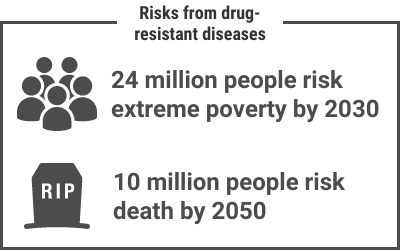
 The UN’s Interagency Coordinating Group on AMR stated in 2019 that drug-resistant diseases could force up to 24 million people into extreme poverty by 2030 and cause 10 million deaths each year by 2050. Its financial impact would be on a scale similar to the 2008 financial crisis and the COVID-19 pandemic. The Global Health Network AMR Research Hub will share current advances and best practices in AMR and raise research visibility, opportunities, and engagement for public health providers, policymakers, and the entire research community in all sectors to actively participate in generating new evidence to tackle AMR.
The Global Health Network wishes to work with other organisations and global initiatives and collaborate to enable more and better research, identify the key priorities to combat antimicrobial resistance, agree on common strategic research priorities and share protocols, standards and practices to address everyone’s aim to mitigate and eventually eliminate the threat of antimicrobial resistance.
This knowledge hub is coordinated by a working group from across partner organisations in Africa, Asia, Latin America and the Caribbean, and the Middle East and North Africa. New partners from all types of organisations who have the shared aim of enabling more and better AMR research by supporting teams in places where such evidence and skills are lacking, and to improve output and processes by sharing methods, data, tools, and resources between all areas, roles, settings, and contexts of AMR research are welcome.
The AMR Hub's development was initially supported by Pfizer Inc, who kindly provided sponsorship towards the design and initiation of the Hub. Currently, the maintenance of the platform and knowledge community is managed by the Global Health Network utilising existing resources.